





Editor’s Note: This story was written by Kelly Dawson and first appeared on Dwell.
Years ago, when Jeffrey Wilson was just getting started in the prefab industry, he set his sights on glamping—you know, camping, but for people who don’t want to get dirty. But he soon ran into issues that only come with experience, like how much time it takes to get a permit and what constitutes a necessity in such a small space. With lessons learned — some gleaned from living in a dumpster for a year — Wilson launched Jupe in 2020.
“I wanted to design a prefab unit that was much more rapidly deployable, had far fewer codes to comply with, and was much less expensive,” he says. “I also wanted to make the process of setting it up much faster.”
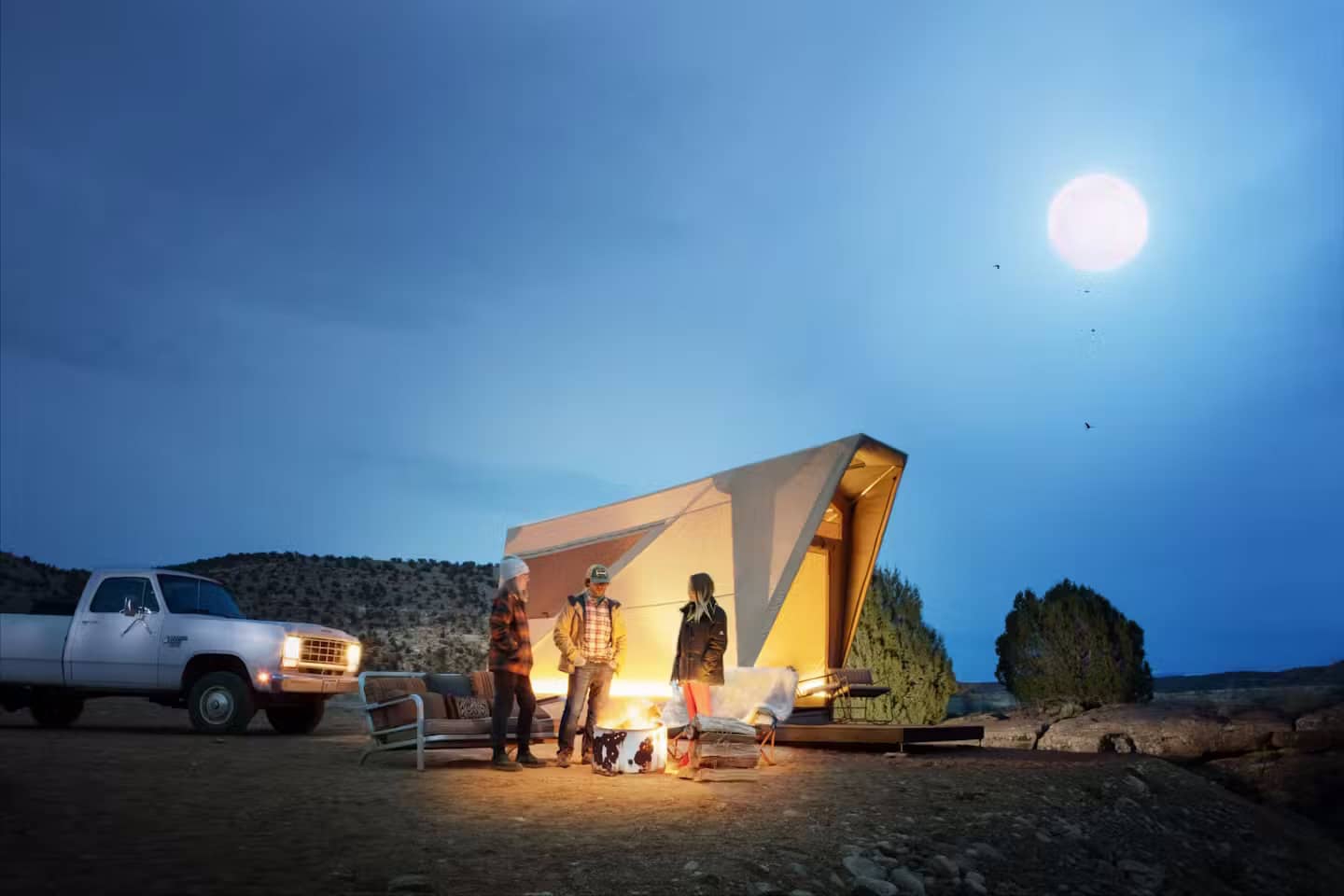
In the beginning, Jupe was still catering to those who wanted to escape into the wilderness with style: It has 11-foot ceilings and a spaceship-like frame that was designed by Tesla and SpaceX engineers, with a queen-sized mattress and Douglas fir details exuding comfort. But lately, that goal has changed, too.
“We are now hard pivoting into the ‘displaced persons’ market,” Wilson says, joining a number of designers rethinking temporary living. He spoke to Dwell from Maui, where Jupe hopes it can provide aid in the form of housing to those affected by August’s devastating wildfires. Below, Wilson discusses the reasons behind the plan, and what makes this prefab model worthy of the cause.
What’s the most exciting project you’ve realized to date?
We specifically designed the Jupe so that it’s under 120 square feet, which is often considered a shed. It is semi-permanent and does not require a slab or grid connections, so it has the ability to move without a trace. In the past, we’ve worked with folks who wanted to add quick accommodations to their land, but now we’re creating a client base that’s primarily focused on housing people who have been displaced by climate disasters.
What does your base model cost and what does that pricing include?
The base model costs between $20,000 and $30,000. The shelter features an 11-foot ceiling, off-grid power, air conditioning, and dimmable LED track lighting alongside USB charging stations near the bed. The exterior is weather-resistant canvas, while the interior is made from Douglas fir.