






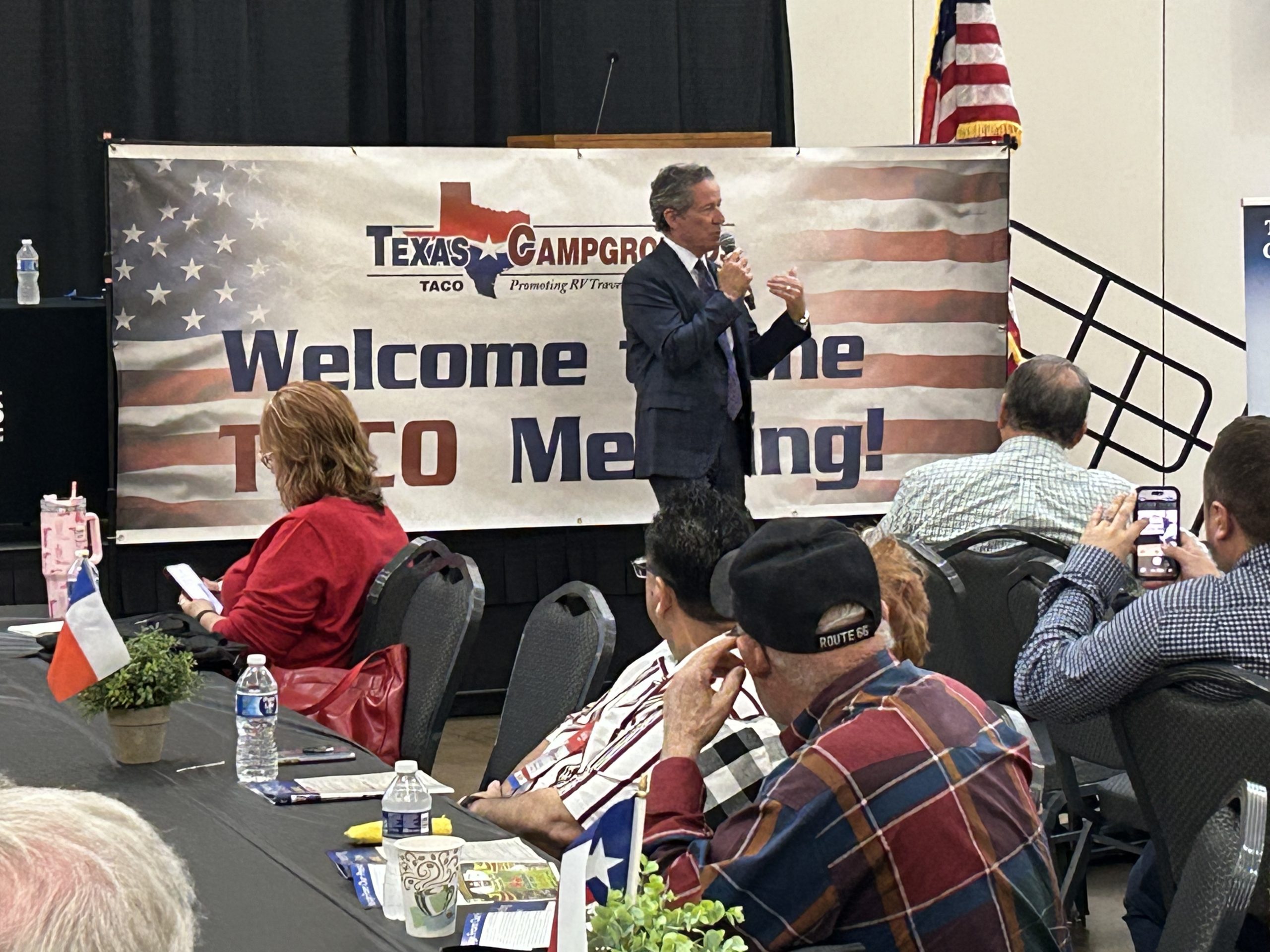
Texas park operators who are upset about skyrocketing property tax increases need to make their concerns known to the people who run for local property tax appraisal district boards, said Kelly Hancock, acting comptroller for the state of Texas.
“That appraisal board can impact you the most,” Hancock said Tuesday (April 21) as he kicked off the Texas Association of Campground Owners’ Spring Meeting and Tradeshow at the Lone Star Convention & Expo Center in Conroe.
Hancock noted that appraisal district board candidates who are favored by cities, counties, school boards and other government entities may have their support because of their willingness to secure as much revenue as possible for them. It, therefore, behooves park operators to get to know these people and make their concerns known.
“You do have a voice,” he said.
Skyrocketing property taxes have been a problem in Texas for many years, with some park operators complaining about annual property tax increases of 100% or more.
Appraisal district board members do not determine property taxes, but they select the people who do, as well as the people who determine whether to lower property values when people contest their assigned property values.
The Texas Tribune wrote a report documenting the appraisal process in 2024 when a new Texas law gave voters the ability to elect appraisal district board members in counties with more than 75,000 residents. But the new law only applies to 50 of the state’s 254 counties, the Tribune said. Additionally, only a portion of the seats on appraisal district boards are elected by the people. The other seats are appointed.
In terms of positive news, Hancock said he expects to see an increase in tourism in Texas in 2026 compared to last year’s figures. He also encouraged park operators to check out the TexStats Economic Dashboard on the State Comptroller’s website, which provides detailed economic statistics in every region of Texas in addition to statewide figures. Hancock said park operators could use that data to identify trends that could help shape their business and marketing decisions.
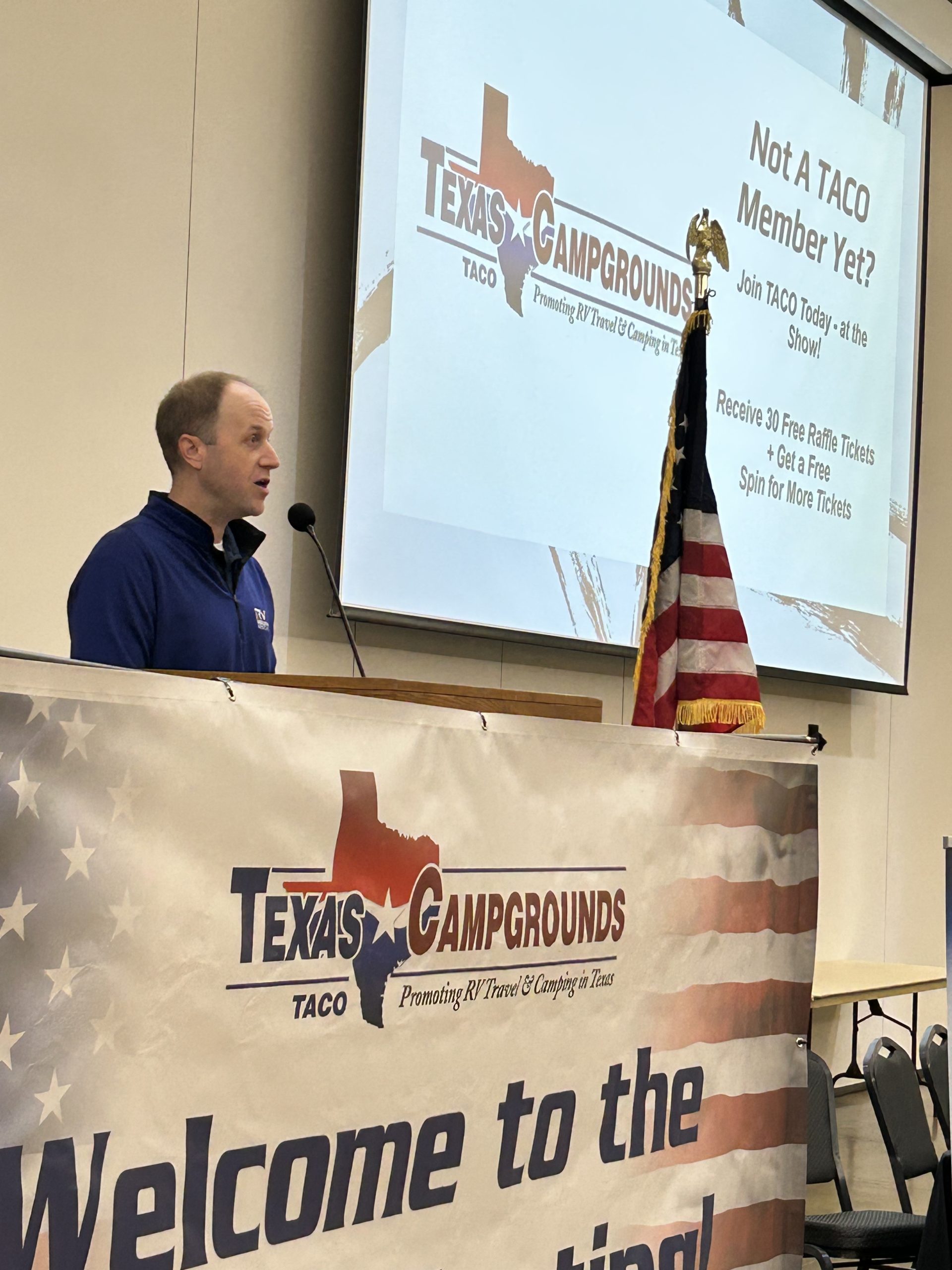
Other speakers on Tuesday included Chris Bornemann, senior director of government affairs for the RV Industry Association (RVIA), who noted that the association is forecasting “healthy growth” this year.
RV shipments are expected to increase to 349,000 units this year, he said, compared to 337,000 in 2025, citing statistics from ITR Economics.
RVIA’s Spring Travel Intentions Survey also estimates that 34 million Americans plan to travel this spring, up 23% from last year’s figures, Bornemann said.
That said, Bornemann said it’s important that every segment of the RV industry — manufacturers, dealers and campgrounds — work together to ensure the continued success of the industry.
“We recognize that the RV consumer does not separate our industry into silos. They think about that one experience. This means our success is tied together,” he said. “From our perspective, we need to stay aligned with consumers and continue speaking with one voice about the recreational value of RVing and camping.”
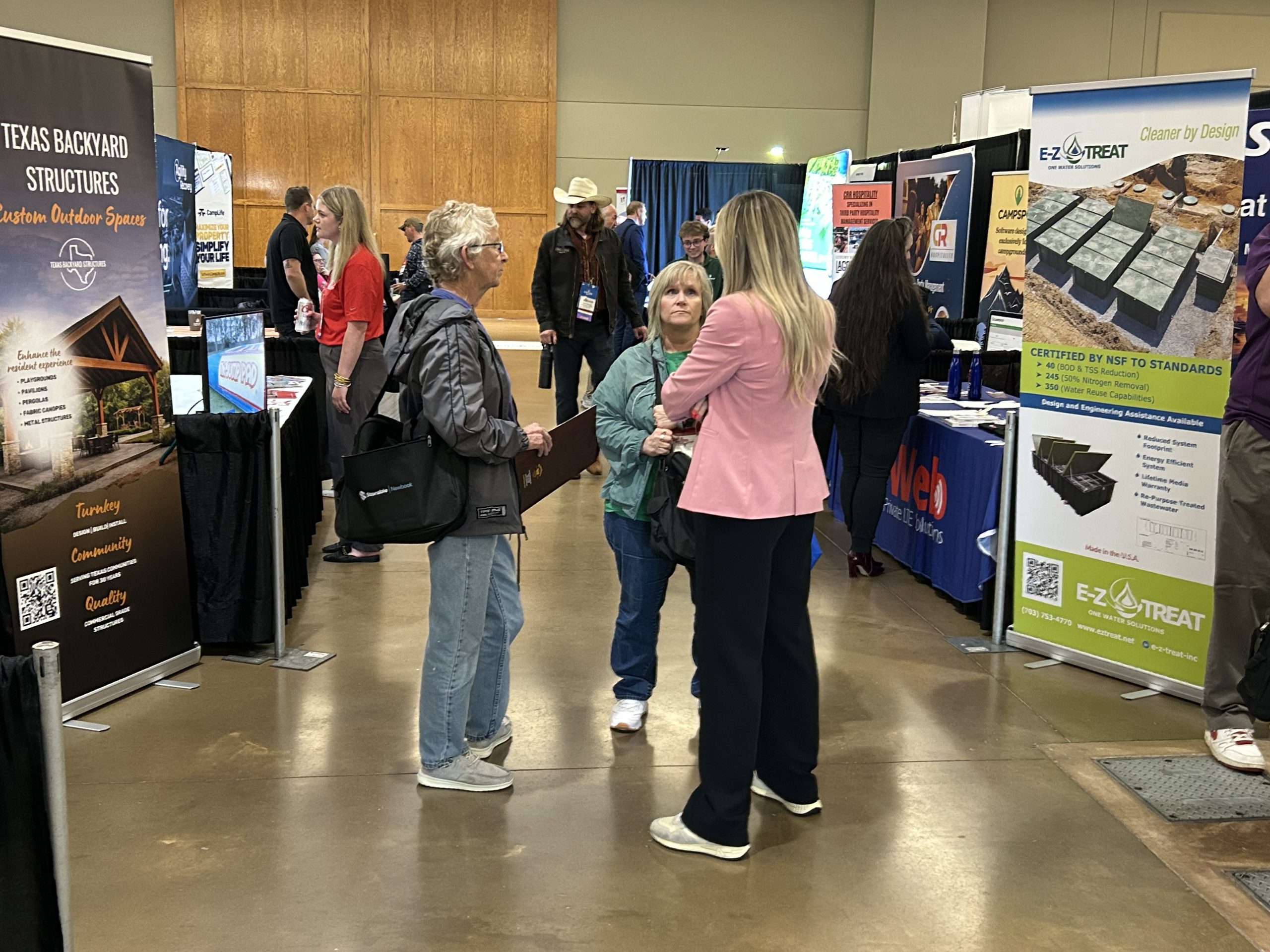
Tuesday’s seminar lineup featured several industry experts, including Jayne Cohen, of the Campground Consulting Group, who talked about the latest trends in the campground industry and how park operators need to adapt.
Cohen and other speakers spoke at length about the importance of guest reviews and how the volume and content of these reviews not only affect a park’s online visibility, but also consumers’ decisions about where to camp.
“People generally no longer trust businesses. Everybody looks up your reputation before doing business with you,” Cohen said, adding that today’s campers place a high value on the experiences they have at your campground.
“You not only have to provide the site, but you have to provide the experience, and that’s where it’s changing,” Cohen said, adding that park operators need to provide the types of experiences that will entice people back to their parks again and again.
For park operators, this not only means providing a welcoming environment but also empowering staff members to quickly address guest concerns.
“Camping is all about hospitality,” Cohen said. “Listen to your campers. They will tell you the experience they want, and what they are willing to pay for it.
“Can your staff solve problems at the front desk without your permission?” Cohen asked. “Empower your reservationists. Do you enable your reservationists or disable them? This business is all about hospitality. No matter how much we embrace technology. Customer service is not a department. It’s a philosophy to be embraced by everyone in an organization. You have to teach, train, coach and lead. Teach and train your staff on the technicalities of their positions. Don’t assume they all know how to give good customer service.”
Cohen also warned park operators to pay attention not only to first impressions, but last impressions.
“How a guest feels when leaving your business is what they remember. Last impressions count,” she said, adding that 78% of people say they will switch to a competitor if they have one bad experience with a business, no matter how many good experiences they had at the business before they had the bad experience.
“Who is your weakest link?” Cohen asked.
TACO Past President Randall Dally and Terry Munoz, of Campground Consulting Group, were expected to lead a discussion today involving all things related to campground maintenance. Other sessions cover details on how to build and expand a park.
Schaeffer and Dally will also join TACO Assistant Executive Director Michael Moore and TACO lobbyist Ron Hinkle in providing legislative updates.