






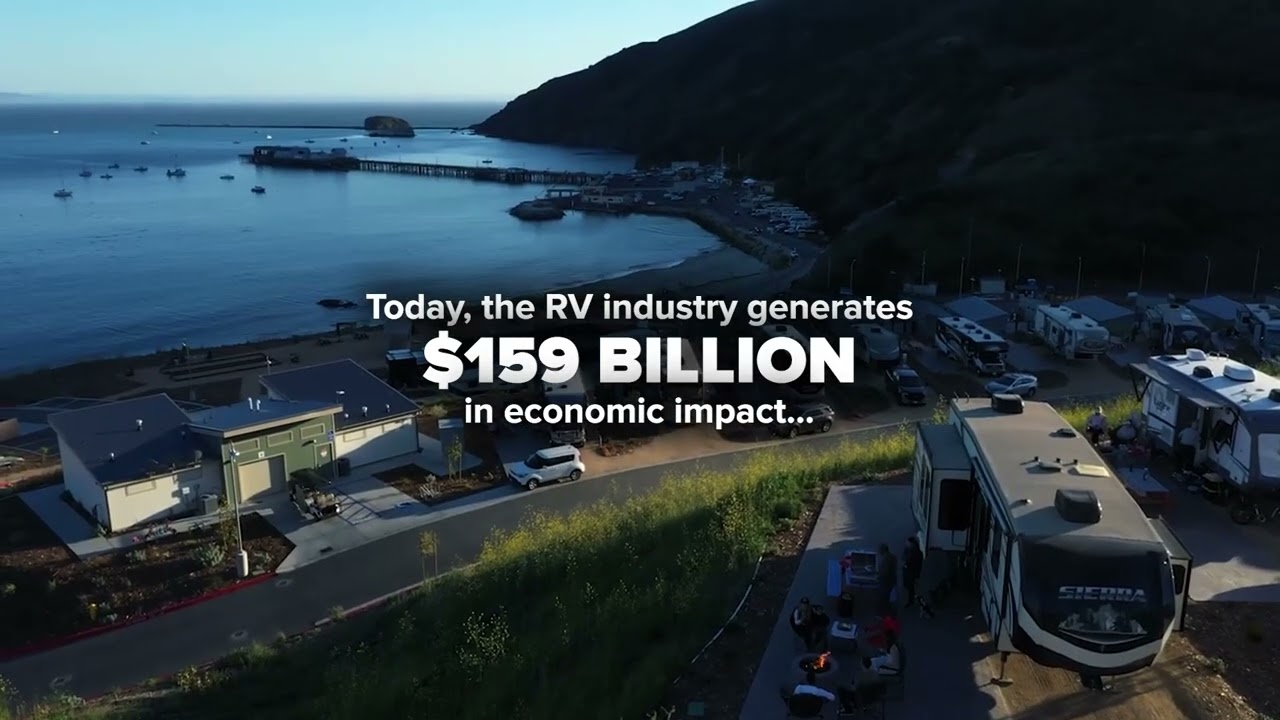
A new comprehensive economic impact study released Monday (June 1) reveals that the RV industry continues to serve as a major driver of the American economy, generating $159 billion in total annual economic output. The study, RVs Move America, demonstrates that the industry supports 643,238 jobs, provides $46.4 billion in wages, and contributes $19.6 billion in total taxes across federal, state, and local levels, according to an RV Industry Association (RVIA) release.
The updated data shows that the economic footprint of the RV industry remains resilient, with economic contributions impacting every state and congressional district. While core vehicle manufacturing has experienced plateauing shipment growth over recent years following a post-pandemic peak, the total economic impact has risen from $140 billion in 2022, primarily driven by broader value-chain activity and systemic inflation along the supplier network.
The data confirms that while domestic manufacturing remains a critical engine, the industry’s presence extends deeply into multiple sectors of the economy. Economic output is split across three primary segments: RV Manufacturers & Suppliers ($70 billion), RV Sales & Service ($38 billion) and RV Campgrounds & Travel ($50 billion). The continued strength of the downstream categories is driven by a steadily expanding base of 8.1 million RV-owning households nationwide, reflecting years of sustained growth and continued consumer enthusiasm for the RV lifestyle.
“The latest economic impact study proves once again that the RV industry is a robust and enduring engine for the American economy, contributing $159 billion annually to the U.S. economy,” said RVIA President Craig Kirby. “Even as manufacturing volumes normalize after a period of historic demand, our industry is contributing more to the economy than ever before. Our manufacturers, suppliers, dealers, and campgrounds, along with millions of RVers, continue to spend money and invest in our communities, directly supporting thousands of small businesses and local economies nationwide.”
Beyond direct industry activities, the business transactions of the RV sector generate an additional $40.9 billion in indirect output for regional suppliers and $45 billion in induced economic activity as workers spend their earnings within their local communities. Major non-endemic sectors benefiting from this ripple effect include finance and real estate, transportation, and business services.
Ultimately, the growth of the RV sector highlights the enduring value of a uniquely American industry. From multi-generation manufacturing hubs to local family campgrounds, the RV industry not only fuels billions of dollars in economic activity but also strengthens the social fabric of the country. By allowing families to explore the nation’s diverse outdoor recreation areas, the industry continues to enrich lives, creating lasting memories while serving as an indispensable foundation for the American economy.
During his presentation, Kirby noted that 2026 has brought both “real challenges and reasons for optimism.”
“What our industry is facing right now is a confidence, affordability, and financing challenge. Consumers still want to travel. They still value experiences, the outdoors, and time with family and friends. But they’re becoming more selective, more cautious, more thoughtful about major purchases and the total cost of ownership. That’s the environment we’re operating in today,” he said.
“At the same time, we’re seeing important shifts working in our favor,” Kirby continued. “RV owners today are younger and more diverse than ever before. They are experience-driven and lifestyle-oriented. This is no longer about just traditional camping. People are using RVs to attend music festivals, sporting events, youth tournaments, and cultural gatherings. The RV is increasingly becoming part of how people experience the moments that matter most in their lives.
“That evolution matters,” he said, “because it aligns RVing naturally with the experiences consumers are already prioritizing. We’re seeing broader participation in outdoor recreation continue to grow, even as usage patterns evolve toward more flexible and occasional travel. That puts a spotlight on something all of us can control — the RV experience. Because long-term growth is not just about getting someone into the lifestyle, it’s about getting them to come back. That second trip, that third trip, the ownership experience, the dealer experience, the campground experience. Those are the moments that create lifelong RVers.
“So, as we move forward, our focus is clear,” Kirby added. “It’s not about waiting for the next economic cycle. It’s about continuing to deliver exceptional experiences, reducing friction in ownership wherever we can, and reinforcing the value of RVing in a more selective spending environment, and continuing to work together across manufacturers, suppliers, dealers, and campgrounds. Because if there’s one thing that we know, it’s that the industry performs best when we are all aligned. We’ve faced challenging cycles before, but this industry has always moved forward because of the people in this room, people willing to innovate, collaborate, and continue to invest in the future of RVing. Yes, we are navigating a difficult cycle, but the fundamentals of this category, the appeal of this lifestyle, and the consumer desire to RV remain strong. The future of RVing is still very bright, and together we were well-positioned to lead it forward.”
The full results of the 2026 RVs Move America Economic Impact Study, including detailed breakdowns by state and congressional district, can be accessed online at www.rvsmoveamerica.org
Awards

Following the economic impact presentation, RVIA recognized two individuals during the luncheon. Matt Carboneau, of Wesco, received the National Service Award, while Whitney Holtz of Windish RV received the National Education Service Award.
RVIA Board Chairman Ryan Elias of Leisure Travel Vans said Holtz was recognized for her “vision, leadership, and passion for workforce development that has helped create new pathways for students to discover meaningful careers in the RV industry.” Through her partnerships with Littleton Public Schools in Colorado and the RV Technical Institute, she has helped establish an innovative model that not only benefits students today but can serve as a blueprint for communities across the country. Whitney, thank you for your leadership, your commitment, and your education, and your dedication to strengthening the future of the RV industry. Congratulations on this well-deserved award. Whitney?
“It’s an honor to accept this award,” Holtz said. “I think all of us in this room know we have a great shortage of RV technicians in this industry. Four years ago, RVTI and EPIC and I started to work on addressing that issue. I’m so proud of the program that we built together, for the visibility it’s brought to this industry for students who might not have considered a career path in it otherwise, for the real-life skills and certifications these students can earn as part of their high school curriculum, and for the technicians it’s produced. For any dealers in the room who see an opportunity for this in their community. I’m so passionate about this program, and I’d love to talk to you about it.”

Carboneau was noted by Elias for his service to the RVIA Board of Directors and multiple committees. He has consistently brought “thoughtful leadership, collaboration, and a deep passion to advancing our association and the RV industry. He’s been a trusted voice and a dedicated advocate for suppliers and industry partners, helping strengthen our association and the broader RV community,” Elias said.
After thanking his wife for sacrificing their time together so that he could volunteer for the association, Carboneau said his time with RVIA has been time well spent.
“I’d like to suggest that everyone here go back to their companies and encourage others within their own companies to volunteer for the various committees and work events that the RV Industry Association puts on,” he said. “It’s well worth the time and effort, and it’s great working with your competitors on a common cause to promote the industry and protect the industry. And it’s surprising, I’m at the table with Jeff Rodino, who’s a competitor, and we’re friendly. So, anyway, it’s a great collaboration and I highly encourage it.”